Why Is Oxygen the Most Critical Biological Factor in Aquaculture?
Fish and seafood farming is now one of the fastest-growing sectors in global agriculture. As the population increases and the demand for high-quality protein rises, aquaculture is taking on a major role in feeding the world. It’s projected that by 2030, over 60% of global seafood will come from fish farms.
Among all key factors in aquaculture — from feed and temperature to disease control — dissolved oxygen (DO) is the most essential element for survival and growth. A lack of oxygen not only stunts growth but can also lead to stress, disease, and mass fish mortality.
Why Is Oxygen Essential in Aquaculture?
Fish extract oxygen from water, and all biological processes — from energy metabolism and digestion to muscle growth, movement, and immune response — directly depend on the DO levels. The amount of dissolved oxygen not only affects fish health but also determines the profitability and operational efficiency of any fish farming operation.
Key Roles of Dissolved Oxygen in Fish Physiology:
- Enhances growth rate
- Improves feed conversion ratio (FCR)
- Boosts immune system function
- Reduces stress and mortality
- Improves flesh quality
- Allows for higher fish density in tanks
In nature, oxygen enters the water via algae, wind, water currents, and waves. But in high-density farming systems, these natural sources are not enough.
That’s where pure oxygen supply becomes critical.
Standard Dissolved Oxygen Levels in Aquaculture
To maintain the health of fish, dissolved oxygen (DO) levels must:
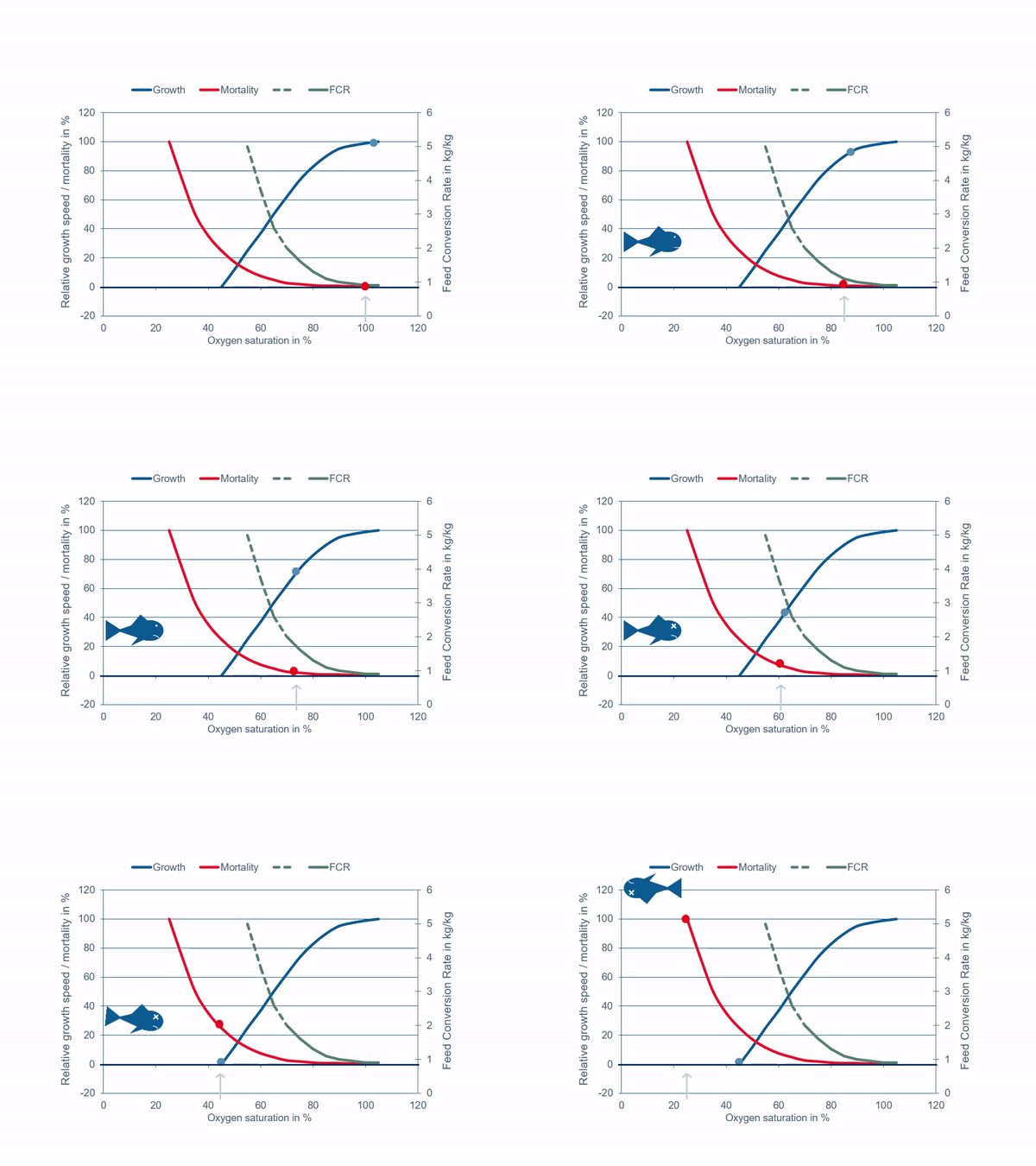
Always remain above 80% saturation.
Falling below this threshold can lead to:
- Reduced feed intake
- Increased susceptibility to diseases
- Higher feed conversion ratio (FCR)
- Mass and sudden mortalities
- Decreased overall production efficiency
At higher temperatures, oxygen solubility decreases. Therefore, oxygen control becomes even more critical during warmer seasons.
Why Are Oxygen Fluctuations Dangerous?
Environmental factors such as:
- Rising water temperature
- Algae blooms
- Reduced water circulation
- Pollution
- High fish density
Can lead to a rapid drop in dissolved oxygen, putting the entire aquaculture system at risk.
In many cases, mass fish mortality occurs as a result of sudden oxygen depletion.
Sources of Oxygen Supply in Aquaculture: A Comparison of Methods
In the fish farming industry, there are two main sources of oxygen supply:
1. Liquid Oxygen (LOX) – The Most Common and Reliable Professional Method
Liquid oxygen is produced through fractional distillation of air and has a very high purity level (99.5%).
It is stored in double-walled insulated tanks and vaporized before injection as needed.
Advantages:
- High purity
- Stable and consistent supply
- Precise injection with sensors and computerized control
- Ideal for large systems, RAS (Recirculating Aquaculture Systems), and industrial-scale farming
Safety Notes:
- Liquid oxygen is a highly reactive oxidizer.
- Direct contact with oils, fats, or organic materials can be dangerous.
- It must always be vaporized before entering the system.
2. On-Site Oxygen Generation (PSA / VPSA Systems)
In this method, oxygen is extracted from air using PSA (Pressure Swing Adsorption) units.
Advantages:
- Suitable for medium to large farms
- Independence from external suppliers
- Reduced transport and storage costs
- On-demand oxygen production
Disadvantages:
- Lower purity compared to LOX
- Requires electricity and periodic maintenance
Why Is Pure Oxygen the Best Option?

Injecting pure oxygen can:
- Increase fish density by multiple times
- Optimize growth rates
- Reduce feed costs
- Minimize mortality rates
- Improve overall profitability and efficiency
According to scientific data, increasing oxygen saturation from 90% to 100% can boost final production by up to 30%.
Energy Costs in Different Oxygen Supply Methods
Conventional Aeration Systems (Blowers, Pumps, Diffusers):
- High energy consumption
- Low efficiency
- Limited oxygen transfer
- Suitable only for emergency conditions
In contrast, pure oxygen systems:
- Require significantly less energy
- Oxygen transfer to water is faster
- Much higher dissolution efficiency
- Precise control via PLC or computer is possible
This performance gap strongly justifies the economic use of pure oxygen in aquaculture.
Automated Oxygen Control: A Necessity in Industrial Aquaculture
In professional systems, oxygen levels are monitored and controlled using sensors and computerized systems. These systems:
- Adjust oxygen injection based on fish activity
- Prevent over-saturation
- Predict oxygen drops and respond immediately
- Eliminate stress and improve meat quality
Oxygen: The Most Valuable Asset in Aquaculture
Successful aquaculture is nearly impossible without precise control of oxygen levels.
Adequate oxygen levels:
- Increase growth rate
- Reduce feed conversion ratio (FCR)
- Decrease disease incidence
- Allow higher stocking densities
- Ensure profitability of the farm
Using pure oxygen—whether in liquid form or on-site generation—is the most reliable and scientifically proven method for oxygen supply.
Parsiagas: A Specialized Oxygen Supplier for Aquaculture
Parsiagas provides:
- Liquid Oxygen (LOX)
- Industrial Oxygen Gas
- PSA Oxygen Generators
- Cylinders and oxygen injection systems
For various fish farming operations (RAS, marine, earthen ponds, recirculating systems, etc.).
For expert consultation on selecting the best oxygen supply system, contact Parsiagas today.