
Glass Manufacturing
Producing industrial, artistic, and architectural glass is virtually impossible without industrial gases. In the melting, forming, and finishing stages of glass manufacturing, gases such as oxygen, nitrogen, and hydrogen play a critical role in temperature control, preventing oxidation, and ensuring the final quality of the product. ParsiaGas supports glass manufacturers by supplying high-purity, reliable gases that improve energy efficiency while delivering clearer, more durable, and globally compliant glass products.
Gas Applications in Glass Manufacturing Industry
- 🔹 Increased combustion efficiency by replacing ambient air with oxygen-enriched combustion in melting furnaces
- 🔹 Reduced emissions such as NOx and SO₂ through oxy-fuel combustion
- 🔹 Creation of an inert atmosphere using nitrogen for float-glass production
- 🔹 Control of unwanted reactions and prevention of oxidation using hydrogen
- 🔹 Improved surface quality during polishing and heat-treatment processes
Related Gases for Glass Manufacturing Industry
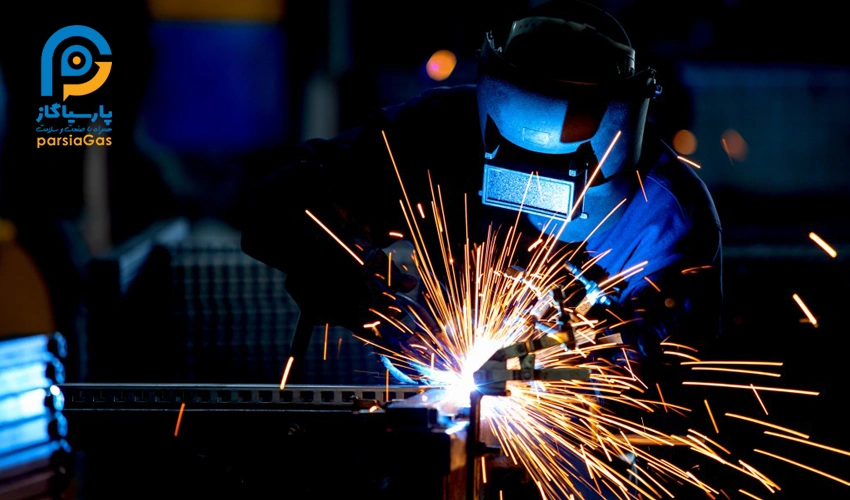
Mixed Gas Pricing & Purchase Inquiry
Parsiagas is a specialized manufacturer of high-precision mixed gases certified under ISO 6142. Gas mixtures are prepared according to the customer’s required percentages and grades, filled into standard cylinders under fully controlled conditions.
Gas Mixtures
Bulk Argon (Storage) | Design & Installation of Argon Storage and Supply Systems
The bulk argon system is designed to provide a continuous and high-volume gas supply. The system includes a cryogenic storage tank, vaporizer, gas pipeline, high-pressure pump, and safety equipment, all engineered, installed, and commissioned by the ParsiaGas technical team.
Argon
Liquid Argon (LAr) | Supply, Tank Installation & Vaporizer Setup
Liquid Argon (LAr), one of the liquefied noble gases, is used in steel manufacturing, medical applications, and laser industries for cooling and creating an inert atmosphere. ParsiaGas designs, supplies, and installs cryogenic storage tanks, vaporizers, and auxiliary equipment for liquid argon systems.
Argon
Nitrogen (N₂) Price Inquiry & Ordering | Purchase Cylinders, Tanks, and Liquid Nitrogen
Parsiagas supplies industrial, laboratory-grade, and liquid nitrogen (LN₂) in various capacities. The exact price of nitrogen depends on purity level, pressure, packaging type, and point of consumption.
Nitrogen
Nitrogen (N₂) Technical Specifications | Physical Properties, Standards & Applications
Nitrogen (N₂) is one of the most widely used industrial gases, applied in both gaseous and liquid form across various industries. This page reviews the physical, chemical, and technical characteristics of nitrogen.
Nitrogen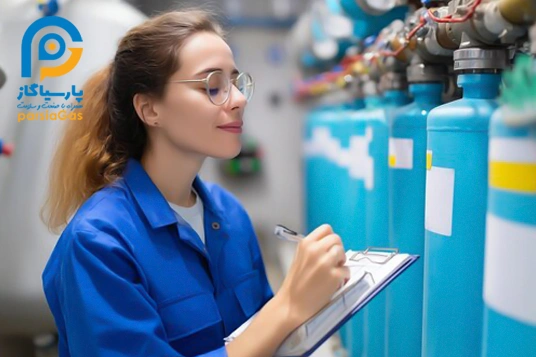
Oxygen (O₂) Technical Specifications
Technical and physical specifications of oxygen gas (O₂), including purity, grade, pressure, density, boiling point, and other characteristics in liquid, gaseous, and bulk states.
Oxygen
Bulk Oxygen / Storage Tanks | Design, Installation & Regular Refilling
Bulk oxygen/storage tanks are an ideal solution for continuous and medium-to-large consumption. ParsiaGas provides complete system design, tank installation, manifold and main regulators, vaporizers, and gas line engineering.
Oxygen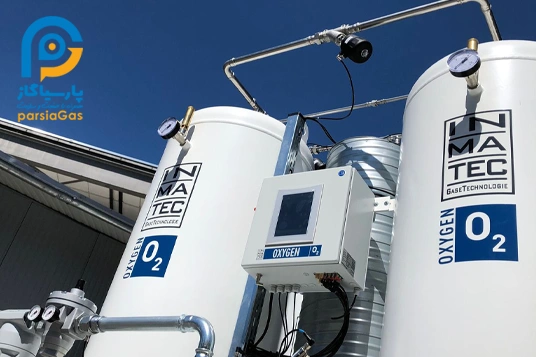
Liquid Oxygen (LOX) | Supply, Tank Installation & Vaporizers
Liquid Oxygen (LOX) is the best option for large medical and industrial consumption. ParsiaGas designs, supplies, and installs cryogenic tanks, vaporizers, and auxiliary equipment according to your required capacity.
OxygenFor technical consultation, price inquiries, or ordering specialty gases for the glass industry, contact our experts today.
Request Consultation & QuoteAdditional Guide: Glass Manufacturing
Applications of Gases in the Glass Industry
The glass manufacturing process involves several key stages, including raw material melting, refining, forming, and controlled cooling. Industrial gases play an essential role in supplying heat, preventing contamination, and precisely controlling the process atmosphere.
Common Industrial Gases Used in Glass Production
| Gas | Main Role & Application |
|---|---|
| Oxygen (O₂) | Increases flame temperature in melting furnaces, reduces fuel consumption by up to 35%, lowers emissions by up to 75%, and improves final glass clarity. |
| Nitrogen (N₂) | Creates an inert atmosphere in the tin bath to prevent oxidation during float-glass production, ensuring high surface quality for flat glass. |
| Hydrogen (H₂) | Controls furnace atmosphere, prevents oxidation, and enhances melting and polishing processes—especially in borosilicate and crystal glass production. |
Benefits of ParsiaGas Solutions for the Glass Industry
✔️ Up to 35% fuel reduction through oxy-fuel combustion
✔️ Up to 40% higher efficiency with faster melting and improved heat control
✔️ Lower emissions: NOx ↓ 75%, SO₂ ↓ 30%, CO₂ ↓ 5%
✔️ Longer refractory life and reduced need for flue-gas treatment systems
✔️ On-site oxygen and nitrogen generators for uninterrupted supply
✔️ Technical support and customized gas-injection system design for flat glass, bottle glass, and crystal production lines
Safety Guidelines for Using Gases in Glass Manufacturing
- Use standardized equipment and gas-specific fittings.
- Perform regular leak checks and ensure proper furnace-area ventilation.
- Store hydrogen and oxygen cylinders separately.
- During tank filling or maintenance, fully purge and secure gas lines.
Conclusion
Industrial gases in the glass industry do far more than supply heat—
they are the key to achieving higher clarity, durability, and production efficiency.
ParsiaGas provides high-purity gases and on-site generation systems, delivering tailored solutions for flat-glass plants, bottle manufacturing, crystal factories, and specialty glass producers.
Frequently Asked Questions about Glass Manufacturing Industry
Why is oxygen used instead of air in glass melting furnaces?
Oxygen increases flame temperature, reduces fuel consumption, and significantly decreases emissions. It also improves the final glass quality.
What is the role of nitrogen in the tin bath?
Nitrogen, often mixed with hydrogen, is used in the tin bath to prevent oxidation of the glass and to produce a smooth, high-quality surface.
Does using oxygen improve energy efficiency?
Yes. Replacing combustion air with oxygen can reduce fuel consumption by up to 35% and lower operational costs.
What is hydrogen used for in the glass industry?
Hydrogen is used to control furnace atmosphere, prevent oxidation of raw materials, and enhance melting and refining processes.
Can ParsiaGas supply industrial gases directly at the customer's site?
Yes. Using on-site generation systems (On-Site Generators), ParsiaGas can supply oxygen and nitrogen with various capacities for different glass factories.