

Why does comparing industrial and medical hydrogen matter?
Hydrogen, the simplest and lightest element on the periodic table, has become one of today’s most important functional gases in both industry and healthcare. However, as with many technical and medical gases, the type and purity of hydrogen play a decisive role in its safety and performance. This is exactly where the distinction between industrial hydrogen and medical hydrogen becomes meaningful.
In recent years, demand for medical hydrogen has grown significantly—especially across therapeutic applications, health-related uses, and scientific research. Meanwhile, industrial hydrogen continues to be widely used in sectors such as oil refining, chemical processing, metal production, and even emerging energy technologies like fuel cells.
But can industrial hydrogen be used for therapeutic purposes? Is the difference between these two types of hydrogen merely a matter of naming, or are there deep technical, hygienic, and safety-related differences? The audience of ParsiaGas—from physicians and healthcare professionals to industrial engineers and laboratory technicians—needs a clear and scientific understanding of these distinctions to make safe, informed decisions.
In this article, we provide a comprehensive scientific, technical, and practical comparison of industrial and medical hydrogen—from production methods and purity standards to applications, differences in equipment and packaging, and the risks associated with improper use of each. Stay with us as we take a closer, analytical look at these two gas categories and help you choose more confidently and safely.
📌 Read more: Oxygen Price Inquiry and Purchase | Industrial & Medical
What Is Hydrogen? Scientific Introduction and Properties of Hydrogen Gas
Hydrogen (H), with atomic number 1, is the first element in the periodic table. This gas is colorless, odorless, tasteless, and extremely light, and it naturally exists in molecular form as H₂.
From a scientific perspective, hydrogen plays a critical role in many chemical reactions, and due to its high energy potential, it has gained significant attention in modern technologies such as fuel cells.
Physical and Chemical Properties of Hydrogen:
| Property | Value |
|---|---|
| State at room temperature | Gas |
| Molecular weight | 2.016 g/mol |
| Boiling point | -252.87 °C |
| Density at STP | 0.08988 g/L |
| Flammability | Very high |
| Color and odor | Colorless and odorless |
| Explosion range | Severe when mixed with air at concentrations between 4% and 75% by volume |
The unique characteristics of hydrogen have led to its extensive use not only in industrial applications but also to growing interest in the medical field, where it is being studied as a therapeutic gas with antioxidant and anti-inflammatory properties.
📌 Read more: Nitrogen (N₂) Technical Specifications | Physical Properties, Standards, and Applications
What Is Industrial Hydrogen?
Industrial Hydrogen Production Methods
Industrial hydrogen is typically produced through Steam Methane Reforming (SMR). In this process, methane gas (CH₄) reacts with steam at high temperatures, producing hydrogen along with carbon dioxide.
Other industrial-scale methods such as coal gasification or water electrolysis also exist; however, SMR remains the most widely used production method.
Purity Levels, Composition, and Technical Characteristics
Depending on the application, industrial hydrogen may have different purity grades, usually ranging from 95% to 99.9%. Unlike medical hydrogen, its production does not necessarily require the complete removal of impurities such as:
- CO (carbon monoxide)
- CO₂ (carbon dioxide)
- H₂S (hydrogen sulfide)
- Moisture or compressor oil particles
unless required for specific applications such as electronics manufacturing or sensitive fuel cell systems.
Applications of Industrial Hydrogen Across Various Industries
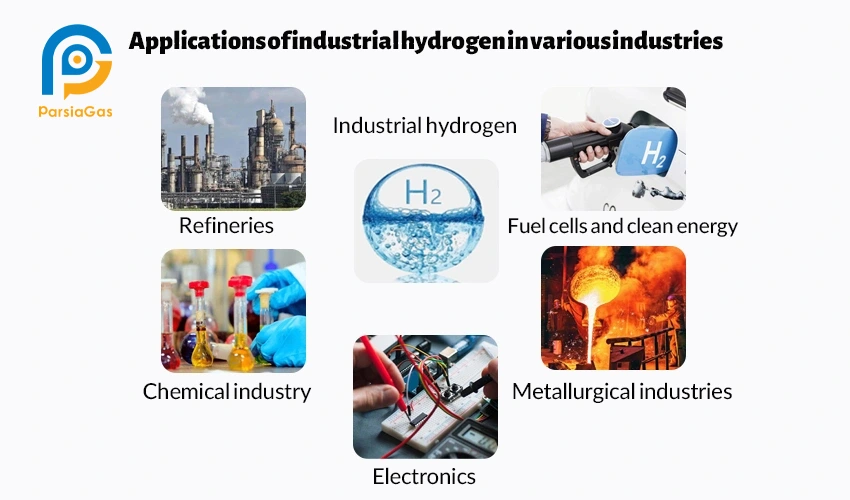
- Refineries: Desulfurization of gasoline and diesel fuels (hydrogenation)
- Chemical industry: Ammonia (NH₃) production for chemical fertilizers
- Metallurgical industries: Metal reduction (e.g., nickel), steelmaking, and furnace atmosphere control
- Electronics industry: Manufacturing of semiconductors and solar panels
- Fuel cells and clean energy: Hydrogen-powered vehicles and green electricity generation
What Is Medical Hydrogen?
Medical Hydrogen Production and Purification Process
Medical hydrogen is typically produced through the electrolysis of ultra-pure water using specialized medical-grade equipment. In this process, water is double-distilled and completely free of impurities before being exposed to an electric current, where it is separated into hydrogen and oxygen.
The resulting gas is then filtered, dried, and purified using dedicated systems to achieve exceptionally high purity levels.
Purity and Safety Standards for Medical Hydrogen Gas
Medical hydrogen must meet a minimum purity level of 99.99% (4N) or higher. This gas:
- Is free from impurities such as CO, SO₂, NOx, and H₂S
- Is stored in medical-approved cylinders
- Is supplied with a Certificate of Analysis (COA) and a traceable serial number
Medical Applications of Hydrogen
Numerous scientific studies in recent years have demonstrated that hydrogen gas possesses antioxidant, anti-inflammatory, and cytoprotective properties. Its medical applications include:
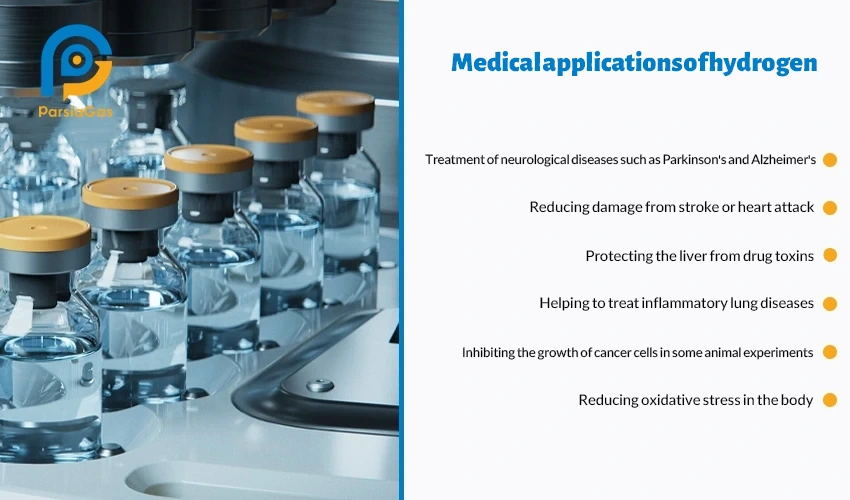
- Treatment of neurological diseases such as Parkinson’s and Alzheimer’s
- Reduction of damage caused by stroke or heart attack
- Protection of the liver against drug-induced toxins
- Supportive treatment for inflammatory lung diseases
- Inhibition of cancer cell growth in certain animal studies
- Reduction of oxidative stress in the body
Comparing the Purity of Industrial and Medical Hydrogen
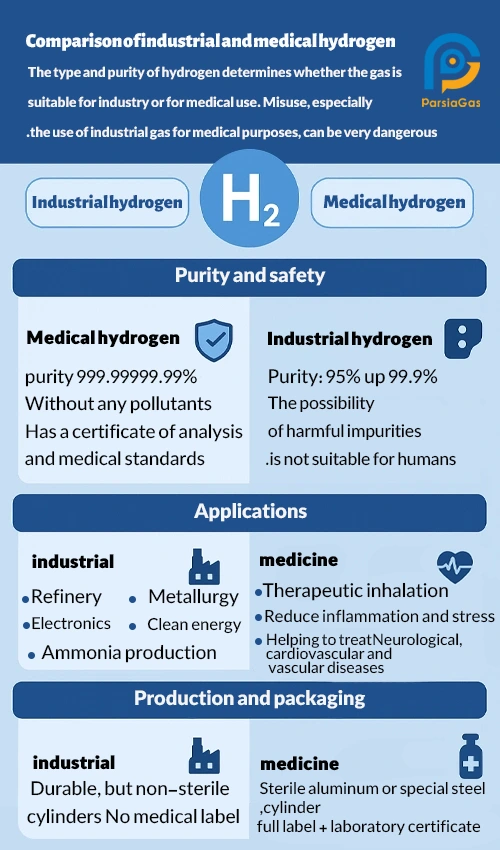
One of the most fundamental differences between industrial hydrogen and medical hydrogen lies in the purity level and overall gas quality. This distinction is not merely numerical—it is critically important in terms of safety, application, and biological impact.
Purity Standards in Industrial and Medical Applications
| Hydrogen Type | Standard Purity | Allowed Impurities | Application |
|---|---|---|---|
| Medical | ≥ 99.999% (5N) | Zero or near-zero | Therapeutic, research |
| Industrial | 95% to 99.9% | Depending on industrial requirements | Manufacturing, metallurgy, energy |
Medical hydrogen must be completely free from toxic gases, heavy metals, oil vapors, and particulate matter. Even the presence of a few parts per million (ppm) of carbon monoxide or sulfur dioxide can pose serious health risks when inhaled.
In contrast, industrial hydrogen prioritizes process efficiency over human safety. As a result, its purification and quality control standards are significantly less stringent than those required for medical hydrogen.
Impact of Impurities on Different Applications
- In industrial applications, the presence of certain impurities may be acceptable or insignificant.
- In medical applications, the same impurities can cause cellular damage, respiratory irritation, and even death.
For this reason, the use of industrial hydrogen in therapeutic devices—such as hydrogen inhalation generators or cellular injection systems—is strictly prohibited and extremely dangerous.
Hydrogen Production and Purification Methods
Just as hydrogen applications vary, production and purification methods differ significantly depending on the intended use.
Production via Water Electrolysis
This method is primarily used for producing medical hydrogen or ultra-high-purity hydrogen for sensitive scientific and electronic applications. In this process:
- Ultra-pure water (deionized and double-distilled) is used.
- Electrodes are made of inert materials such as platinum to prevent contamination.
- The system includes final filtration stages to remove vapors, particles, and potential contaminants.
Recovery from Natural Gas (Steam Methane Reforming – SMR)
This is the most common method for industrial hydrogen production. While cost-effective, it leaves impurities such as:
- CO and CO₂
- CH₄ (methane gas)
- Sulfur compounds or organic substances
These impurities remain in the gas unless additional purification processes are applied for sensitive applications.
Purification Technologies for Medical Applications
To achieve medical-grade hydrogen purity, a combination of multiple advanced purification stages is employed, including:
- Pressure Swing Adsorption (PSA)
- Selective membranes
- Impurity removal catalysts
- Final micron-level filtration systems
Only after passing through all these stages can the resulting gas meet medical-grade standards.
Detailed Comparison of Industrial and Medical Hydrogen Applications
Industrial Applications
Industrial hydrogen plays a critical role across a wide range of industries. Some of its most important applications include:
- Oil refining: Breaking heavy hydrocarbon molecules and desulfurizing fuels
- Ammonia production: A vital component of the Haber–Bosch process for chemical fertilizer manufacturing
- Metallurgy: Used as a protective atmosphere during metal melting to prevent oxidation
- Electronics: Employed as a shielding gas in semiconductor manufacturing
- Clean energy: Used as fuel in fuel cells and hydrogen-powered vehicles
Medical Applications
Unlike the past, when the medical use of hydrogen was largely unknown, recent studies have shown that this gas can possess significant therapeutic properties, including:
- Reduction of systemic and localized inflammation
- Decreased brain damage following stroke or trauma
- Improved immune cell function
- Counteracting oxidative stress and free radicals
- Supporting recovery in cancer treatment (in combination with chemotherapy)
Medical hydrogen inhalation is performed in a controlled manner using specialized equipment and requires high purity levels along with safe, medical-approved systems.
Safety Considerations in the Use of Hydrogen
Explosive Properties of Hydrogen
Hydrogen is highly flammable and explosive. When mixed with air at concentrations between 4% and 75% by volume, even a small spark can trigger a violent explosion. Therefore:
- All equipment used must be spark-proof.
- Transportation and storage must strictly comply with established safety standards.
- Gas leaks must be detected using fast-response, high-sensitivity sensors.
Safety in Transportation, Storage, and Use
- Cylinders must be equipped with high-pressure valves and safety relief valves.
- The use of standard, application-specific pressure regulators is mandatory.
- Hydrogen transportation must be carried out using specialized vehicles operated by trained drivers.
Differences in Safety Equipment: Industrial vs. Medical Applications
In medical applications:
- All systems must be sterile, equipped with antibacterial filters, and safe for human use.
- Respiratory masks and inhalation devices must be made from inert, non-toxic materials.
- All equipment must be manufactured or approved under the supervision of food and drug regulatory authorities.
In industrial applications:
- Greater emphasis is placed on mechanical strength, high operational efficiency, and corrosion resistance.
- Sterility and hygiene requirements are not applicable, as there is no direct human use.
Differences in Packaging and Cylinder Standards
One of the most critical distinctions between industrial hydrogen and medical hydrogen lies in packaging standards, cylinder design, and labeling requirements. These differences are essential not only for maintaining gas quality but also for ensuring end-user safety.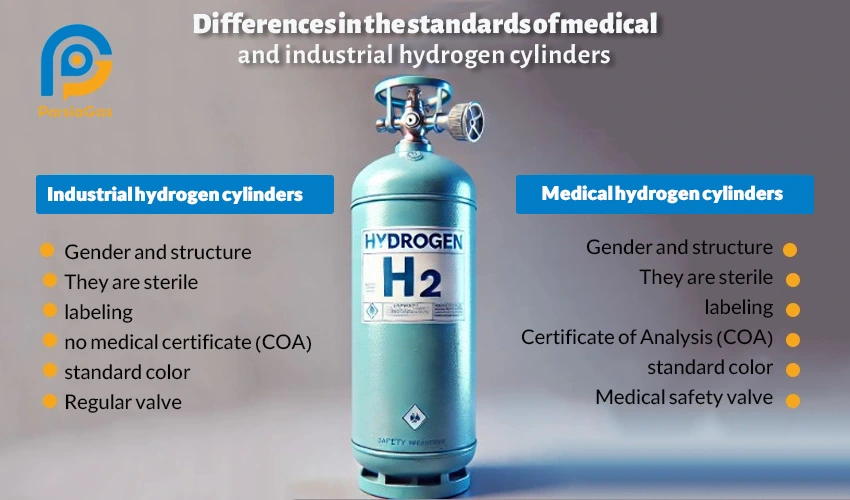
Medical Hydrogen Cylinders
- Material and construction: Manufactured from stainless steel or special medical-grade aluminum with anti-corrosion coatings to resist moisture, chemicals, and gas leakage.
- Sterilization: Cleaned and sterilized prior to filling using dry gas or sterilizing steam.
- Labeling: Clearly marked as “Medical Grade Hydrogen”, including technical specifications, purity percentage, production date, serial number, and batch number.
- Certificate of Analysis (COA): Each cylinder is supplied with a laboratory certificate verifying gas purity and safety.
- Standard color coding: Depending on national regulations, medical cylinders are commonly white or light green.
- Medical safety valves: Equipped with valves specifically designed for medical use and compatible with medical-grade regulators.
Industrial Hydrogen Cylinders
- Material and construction: Thicker and more robust, designed to withstand high pressures in industrial environments.
- No sterilization requirement: Internal cleanliness at an acceptable industrial level is sufficient.
- Labeling: Typically labeled as “Industrial Hydrogen” or simply “H₂”, often without detailed purity information.
- No medical certification: These cylinders do not carry medical analysis certificates or authorization for human use.
- Standard color coding: Dark blue or gray to distinguish them from medical cylinders.
- Valves and regulators: Designed for high-pressure and technical applications, not suitable for medical use.
Pricing of Industrial and Medical Hydrogen in the Iranian Market
The Iranian specialty gas market is steadily expanding, and the price difference between industrial hydrogen and medical hydrogen depends heavily on purity level, production method, brand, and purchase volume.
Factors Affecting the Price of Medical Hydrogen
- Specialized production methods: Use of costly equipment to achieve high purity (e.g., electrolysis with deionized water).
- Strict quality control standards: Laboratory testing, certifications, and regulatory health oversight.
- Sterile and traceable cylinders: Specialized packaging with full traceability.
- Limited number of producers in Iran: Medical hydrogen production requires official licensing, resulting in lower market competition.
Pricing of Industrial Hydrogen
- Large-scale production: Using SMR technology at lower cost.
- No requirement for sterile equipment or specialized medical packaging
- Variable pricing based on required purity and purchase volume
- Easier access to domestic and imported suppliers
Legal Standards and Licenses for Supplying Medical Hydrogen
Medical hydrogen may only be distributed if it is produced and packaged in compliance with the regulations of the Ministry of Health and Medical Education.
Legal Requirements in Iran:
- Medical gas production and distribution license: Only companies approved by the Food and Drug Organization are authorized to produce or import medical gases.
- Complete labeling: Including purity level, batch number, production and expiration dates, and manufacturer information.
- Laboratory approvals: A Certificate of Analysis is mandatory for every production batch.
- Ongoing regulatory oversight: Distribution centers are subject to periodic inspections by the Ministry of Health.
The Role of Specialized Suppliers Such as ParsiaGas
With a proven track record in supplying both medical and industrial gases, ParsiaGas holds official authorization for the sale of medical gases. All products are delivered with certified documentation, sterilized cylinders, and standard-compliant auxiliary equipment.
Can Industrial Hydrogen Be Used Instead of Medical Hydrogen?
The answer to this question is a clear and scientific “No.”
Although both gases are molecularly identical (H₂), differences in purity level, production methods, equipment, packaging, and safety standards make them completely non-interchangeable.
Risks of Using Industrial Hydrogen in Medical Applications:
- Toxic impurities such as CO and H₂S, which may be present in industrial hydrogen, can lead to brain damage, respiratory complications, and even death.
- Non-sterile cylinders may cause microbial contamination.
- Incompatible regulators and connections can result in gas leakage or explosions.
Even in emergency situations, the use of industrial hydrogen for human applications is strongly discouraged.
Trusted Brands and Hydrogen Supply Sources in Iran
International Brands:
- Air Liquide (France)
- Linde (Germany)
- Praxair (USA)
- Messer Group (Europe)
These companies produce high-purity hydrogen suitable for medical and laboratory applications.
Reputable Iranian Producers and Distributors:
- Havayar
- Mehregan Gas
- Arya Gas
How to Choose the Right Type of Hydrogen
Selection Guide for Industrial Applications:
- Type of application (refining, welding, electronics)
- Required purity level
- Price and consumption volume
- On-site storage and safety conditions
Selection Guide for Medical Facilities:
- Purchase only from authorized suppliers
- Ensure the cylinder is labeled as medical-grade and accompanied by a laboratory Certificate of Analysis (COA)
- Verify that auxiliary equipment such as regulators, masks, and safety valves are compatible with medical use
- When in doubt, consult ParsiaGas sales specialists
Conclusion: Choosing Between Industrial and Medical Hydrogen
In this article, we examined the fundamental differences between industrial hydrogen and medical hydrogen from scientific, technical, and practical perspectives. Despite their chemical similarity, these gases differ significantly in applications, purity requirements, equipment, safety standards, and regulatory frameworks.
Using industrial hydrogen in medical applications is a dangerous mistake that can result in irreversible health consequences. In contrast, medical hydrogen—when sourced from reliable suppliers and compliant with international standards—represents a promising tool in modern medicine, with the potential to improve disease treatment and quality of life.
At ParsiaGas, we strongly recommend consulting with our experts before making any purchase to ensure a safe, scientific, and need-appropriate selection.
Frequently Asked Questions (FAQ)
1. Are industrial hydrogen and medical hydrogen chemically different?
No. Both are chemically identical (H₂), but the differences lie in purity levels, safety standards, and intended applications.
2. Is industrial hydrogen suitable for medical treatment?
No, absolutely not. Industrial hydrogen contains hazardous impurities and must never be used for human applications.
3. How can genuine medical hydrogen be identified?
Key indicators include proper labeling, a Certificate of Analysis (COA), purchasing from reputable suppliers such as ParsiaGas, and sterile packaging.
4. How much more expensive is medical hydrogen compared to industrial hydrogen?
Medical hydrogen is typically two to three times more expensive, due to specialized production, purification, quality control, and packaging processes.
5. Does ParsiaGas supply medical hydrogen?
Yes. ParsiaGas supplies high-purity medical hydrogen under official authorization, along with complete auxiliary equipment.