
Welding
Welding is one of the most critical engineering processes in the metal industry, used for joining, repairing, and cutting various types of metals. In this industry, industrial gases such as oxygen, argon, nitrogen, helium, and carbon dioxide play a key role in heat generation, weld-pool protection, and improving the quality of the joint. The primary goal in welding is to create a permanent connection between two metals using heat or pressure.
Gas Applications in Welding Industry
- 🔹 Heat Generation: Used with fuel gases to create a high-temperature flame (oxygen, acetylene, propane).
- 🔹 Weld Pool Protection: Prevents the molten metal from contacting atmospheric oxygen or nitrogen.
- 🔹 Improved Weld Quality: Stabilizes the electric arc, enhances penetration, and reduces porosity at the joint surface.
Related Gases for Welding Industry
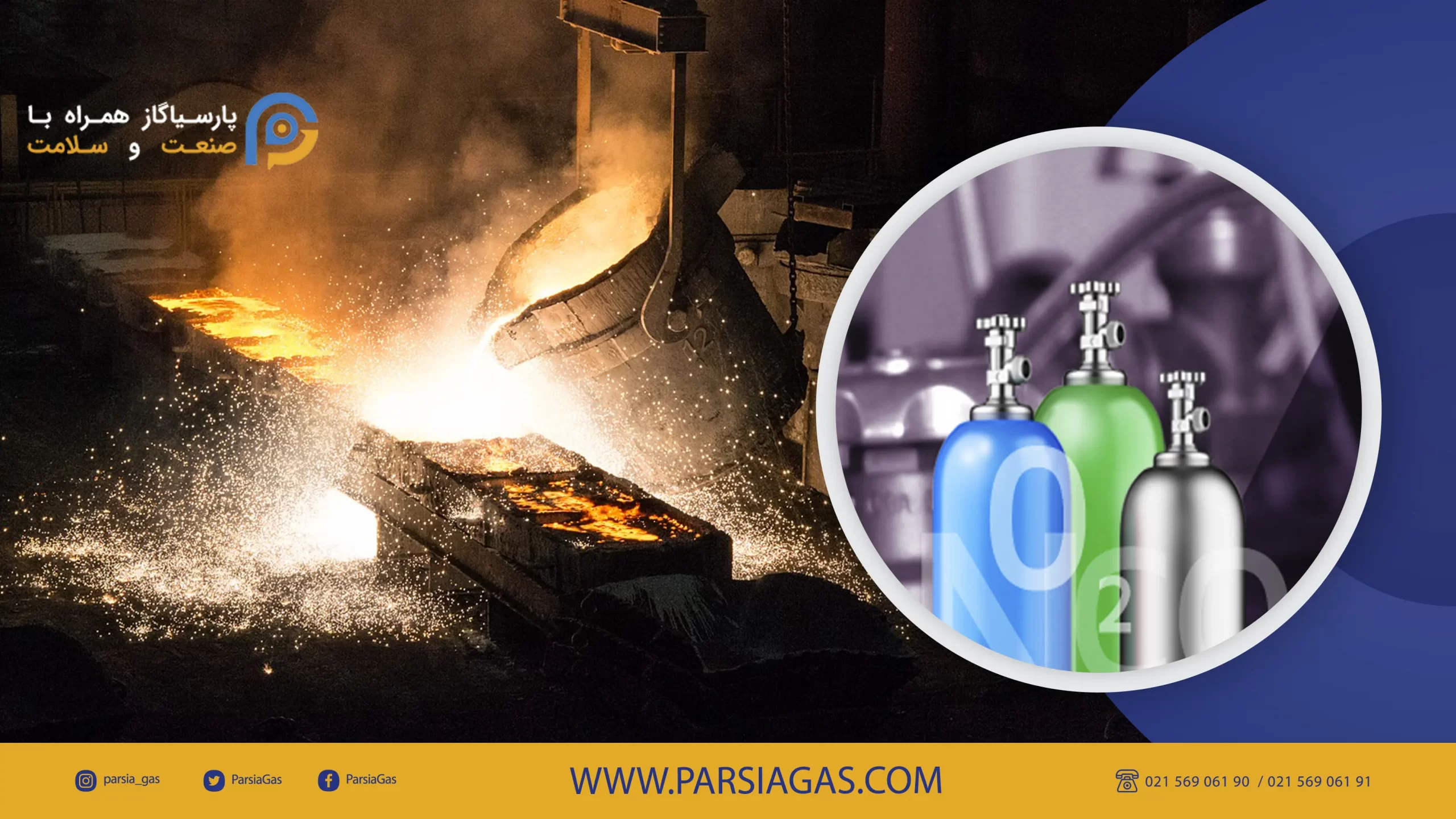
Welding Mixed Gases
Parsiagas welding mixed gases are designed for MIG/MAG, TIG, and cutting processes. The precise composition of inert and active gases improves arc stability, reduces spatter, and enhances weld quality.
Gas Mixtures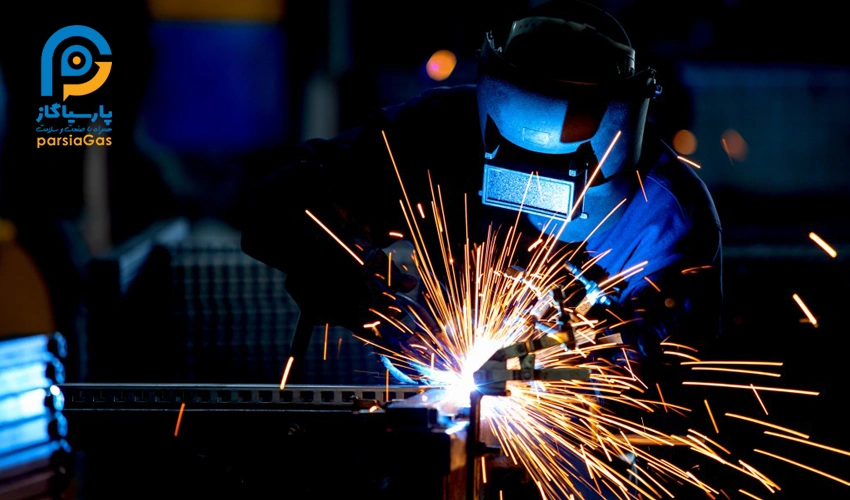
Mixed Gas Pricing & Purchase Inquiry
Parsiagas is a specialized manufacturer of high-precision mixed gases certified under ISO 6142. Gas mixtures are prepared according to the customer’s required percentages and grades, filled into standard cylinders under fully controlled conditions.
Gas Mixtures
Gas Mixtures | Professional Production and Customized Gas Blending
Parsiagas produces a wide range of customized gas mixtures using high-precision blending and control equipment. These mixtures are supplied with accurate composition tolerances and certified calibration documentation.
Gas Mixtures
Argon Gas Technical Specifications
Argon is an inert noble gas that is colorless, odorless, and non-flammable under ambient conditions. It is separated from liquid air and, due to its high purity, is widely used in welding, steel production, and laboratory applications.
Argon
Argon Cylinder (Ar) | Pure & Mixed Gas for MIG/TIG Welding
Cylinder argon is the most common form of argon supply for welding, laboratory, and industrial applications. Parsiagas offers standard cylinders in various sizes, filled with high-purity argon at 150–200 bar pressure.
Argon
Argon (Ar) | Inert Gas for Welding & Industrial Applications
Argon (Ar) is a noble, inert, colorless gas widely used in welding processes, metal melting, lamp manufacturing, and laser industries. ParsiaGas supplies high-purity and mixed argon (Ar + CO₂) in various supply forms.
Argon
Nitrogen (N₂) Price Inquiry & Ordering | Purchase Cylinders, Tanks, and Liquid Nitrogen
Parsiagas supplies industrial, laboratory-grade, and liquid nitrogen (LN₂) in various capacities. The exact price of nitrogen depends on purity level, pressure, packaging type, and point of consumption.
Nitrogen
Nitrogen (N₂) Technical Specifications | Physical Properties, Standards & Applications
Nitrogen (N₂) is one of the most widely used industrial gases, applied in both gaseous and liquid form across various industries. This page reviews the physical, chemical, and technical characteristics of nitrogen.
Nitrogen
Nitrogen Cylinder (N₂) | Industrial, Food-Grade & Laboratory
Compressed nitrogen (N₂) cylinders are supplied at 150 and 200 bar with purity levels ranging from industrial to high-purity laboratory grade. ParsiaGas provides cylinder filling, delivery, and the appropriate regulators and manifolds for your gas distribution systems.
Nitrogen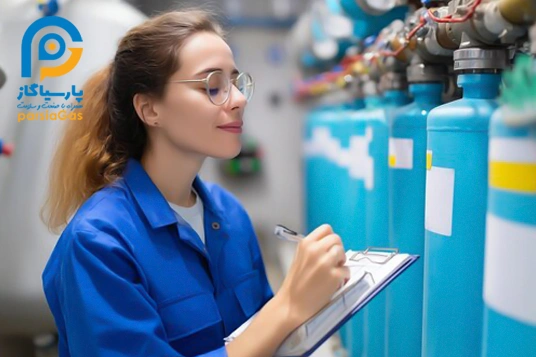
Oxygen (O₂) Technical Specifications
Technical and physical specifications of oxygen gas (O₂), including purity, grade, pressure, density, boiling point, and other characteristics in liquid, gaseous, and bulk states.
Oxygen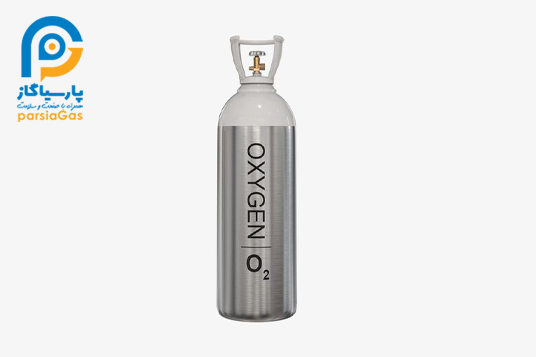
Industrial & Medical Oxygen Gas (O₂)
Oxygen (O₂) is an essential gas widely used across medical and industrial applications. Parsia Gas supplies oxygen in liquid form (LOX), cylinders, and bulk deliveries, offering various purity grades to meet specific operational requirements.
OxygenParsiaGas ensures reliable supply of high-purity, standard, and safe industrial gases to meet the needs of professional welders, workshops, and large metal-manufacturing plants.
Request Consultation & QuoteAdditional Guide: Welding
Common Industrial Gases Used in Welding
| Gas Name | Role & Application in Welding |
|---|---|
| Oxygen (O₂) | Enhances combustion and increases flame temperature in torches; used for cutting and welding thick metals. |
| Argon (Ar) | Inert shielding gas for weld-pool protection in TIG and MIG welding; prevents oxidation of the metal. |
| Nitrogen (N₂) | Improves arc stability, enhances weld penetration, and reduces pitting corrosion in stainless steels. |
| Carbon Dioxide (CO₂) | Cost-effective shielding gas for MIG welding of mild steels; often mixed with argon for better arc control. |
| Helium (He) | Increases heat conductivity and arc temperature; ideal for copper, aluminum, and magnesium alloys. |
| Fuel Gases (Acetylene, Propane, Butane) | Used with oxygen to generate a high-temperature flame for cutting or melting metals. |
Common Welding Processes and Related Gas Usage
| Process Type | Gases Used | Description |
|---|---|---|
| Arc Welding | CO₂, Argon, Helium | Uses an electric arc to melt base metal; shielding gases prevent oxidation. |
| TIG Welding (Tungsten–Argon) | Argon, Helium | Suitable for precision welding of stainless steel and aluminum; argon is the primary shielding gas. |
| MIG Welding (Metal in Gas) | CO₂, Argon + CO₂ | Suitable for larger components and high-speed welding; provides a stable arc and deep penetration. |
| Oxy-Acetylene Welding | Oxygen + Acetylene | Classical process for cutting, brazing, and general metal repair. |
Advantages of ParsiaGas Welding Gases
- High purity (up to 99.99%) for consistent arc performance
- Available in cylinders, bundles, or bulk tanks
- Support for MIG/MAG and TIG specialty gas mixtures
- Ability to supply custom mixtures (e.g., Ar + CO₂, Ar + He)
- COA (Certificate of Analysis) provided with every refill
Safety Guidelines When Working with Welding Gases
- Never store oxygen and acetylene cylinders next to each other.
- Ensure proper ventilation to reduce risks of suffocation or explosion.
- Use regulators, gauges, and hoses rated for each specific gas.
- After finishing work, close cylinder valves and install protective caps.
Frequently Asked Questions about Welding Industry
What is the best shielding gas for aluminum welding?
Pure argon or mixtures of argon and helium provide the best results in aluminum and magnesium welding.
What gases are used in stainless steel welding?
Stainless steel welding typically uses mixtures of argon, nitrogen, and a small percentage of CO₂ to increase arc stability and prevent porosity.
What is the difference between shielding gas and fuel gas?
Shielding gases such as argon or CO₂ protect the weld pool from oxidation, while fuel gases (such as acetylene) are used to generate heat and flame.
Is using nitrogen in welding dangerous?
Nitrogen is an inert gas, but it must be used in well-ventilated areas to avoid the risk of asphyxiation in confined spaces.
What types of gases does ParsiaGas supply for welding applications?
ParsiaGas supplies high-purity industrial gases, gas mixtures, bundles, bulk systems, and specialized welding gases for MIG/MAG and TIG processes.